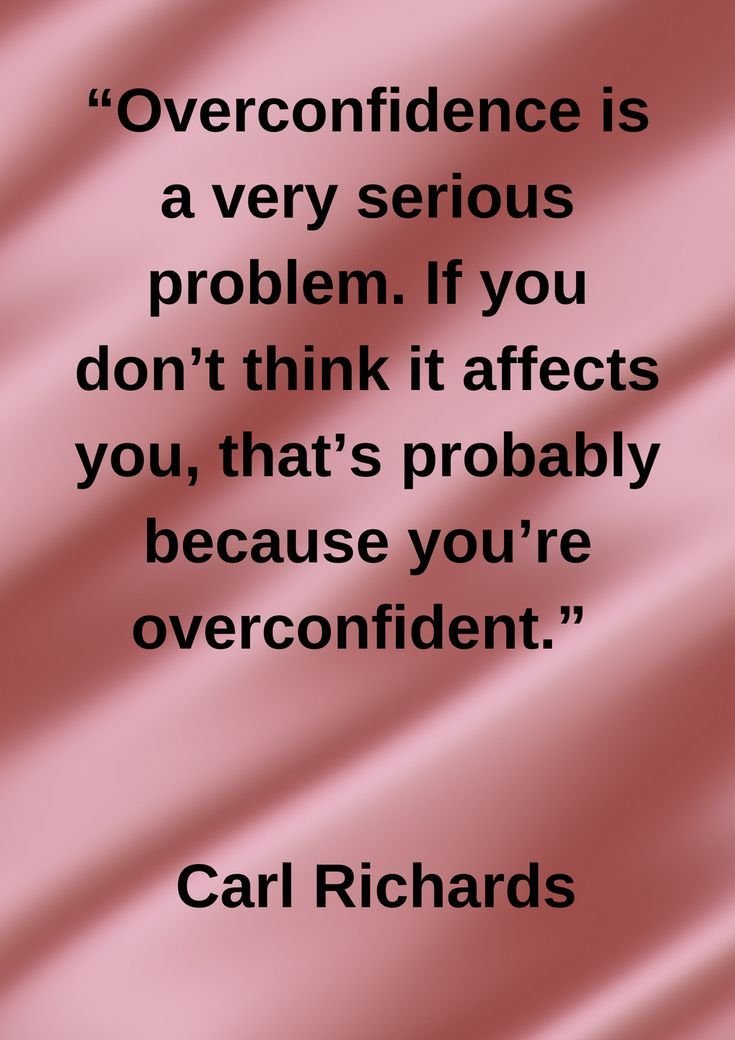
When a project spirals out of control, missing deadlines, blowing budgets, and failing to deliver on its promises, the culprit isn't always external forces. Often, the seeds of failure are sown internally, deep within the collective psyche of the team and its leadership. One of the most insidious and pervasive internal threats is The Dangers of Overconfidence in Project Management. This isn't about healthy self-belief; it's about an unexamined certainty that blinds us to risks, skews our judgment, and ultimately cripples even the most well-intentioned plans.
Consider the countless projects launched with grand ambitions, only to crumble under the weight of underestimated complexity or unforeseen obstacles. From tech giants to small startups, the pattern repeats: a belief that "this time it's different," "we've got this," or "it's just a minor hurdle." This pervasive overconfidence doesn't just make things harder; it actively sabotages success.
At a Glance: Understanding and Counteracting Overconfidence
- What it is: The tendency to overestimate your abilities, knowledge, or control over project outcomes, leading to poor decisions.
- Key Types: Includes believing you know more than you do (Illusion of Knowledge), overestimating positive outcomes (Optimism Bias), and underestimating project time/cost/risk (Planning Fallacy).
- Impact on Projects: Leads to unrealistic plans, ignored risks, flawed decision-making, resource shortages, and unattainable performance goals.
- Leadership Peril: Overconfident leaders miss warning signs, overcommit resources, and resist necessary adaptation, often with severe financial consequences (e.g., FTX, Meta's Metaverse).
- Mitigation Strategies: Embrace comprehensive research, diverse input, data-driven decisions, rigorous risk assessment, external advice, and fostering a culture of critical thinking and dissent.
- The Goal: Cultivate realistic optimism grounded in data and diverse perspectives, ensuring projects are built on solid ground, not just wishful thinking.
What Exactly Is Overconfidence (And Why Does It Matter So Much)?
At its core, overconfidence is a cognitive bias – a systematic error in thinking that affects the decisions and judgments people make. It manifests as an unwarranted belief in one's own capabilities, foresight, or control, often leading to a skewed perception of reality. For project managers, this isn't just a personality quirk; it's a direct threat to project viability.
Think of it this way: if you genuinely believe you can leap a 20-foot chasm, you won't bother measuring it, checking your footing, or considering the consequences of a fall. In project management, that chasm might be a complex technical integration, a tight deadline, or an ambitious budget. Overconfidence convinces you that you'll make the jump without a hitch, often ignoring the very real, very dangerous gap in front of you.
This bias isn't monolithic; it typically appears in three distinct forms, each with its own insidious way of derailing projects:
- The Illusion of Knowledge: This is when you believe you understand a situation or task more deeply than you actually do. You might assume familiarity with a technology means you know every intricate detail, or that past experience with one type of project makes you an expert on all similar ventures. This leads to overestimations of your ability to predict events and control outcomes, making you less likely to seek out critical information or expertise.
- Optimism Bias: Here, you tend to overestimate the likelihood of positive outcomes while simultaneously underestimating the potential for negative ones. "Our team is too good for that problem," or "it'll all work out in the end," are classic refrains. This bias paints an overly rosy picture, downplaying potential pitfalls and creating a false sense of security.
- The Planning Fallacy: Perhaps the most famous and universally experienced form of overconfidence in project management. This is the tendency to underestimate the time, costs, and risks associated with future actions, while overestimating the benefits. It's why projects consistently run late and over budget, despite the best intentions. We assume ideal conditions, forget hidden tasks, and conveniently overlook potential roadblocks.
Understanding these specific flavors of overconfidence is the first step toward building stronger, more resilient project plans. It’s about recognizing the enemy within your own mind and developing strategies to keep it in check.
The Silent Saboteur: How Overconfidence Undermines Project Phases
Overconfidence doesn't just hit at one point; it permeates every stage of a project lifecycle, distorting judgment and amplifying risks. Let's break down how this bias impacts critical project management areas and, more importantly, how to build robust defenses.
Blindsiding Your Blueprint: Overconfidence in Project Planning
The very foundation of a project – its plan – is often the first casualty of overconfidence. Believing you know the path forward perfectly, or that your team can achieve anything, leads to setting wildly ambitious goals and timelines. You might skip crucial research steps, dismiss stakeholder concerns, or gloss over detailed requirements gathering, all because of an unfounded certainty in your initial vision.
The Danger: Unrealistic plans are doomed from the start. They create a false sense of security, leading to resource misallocations, missed milestones, and a rapid erosion of team morale when the inevitable shortfalls appear. It’s like starting a marathon convinced you can run it in an hour, only to burn out by mile three.
Mitigation: Grounding Plans in Reality, Not Wishful Thinking
- Comprehensive Research: Don't just rely on assumptions. Dig deep into market trends, competitor analysis, technological feasibility, and historical performance data.
- Diverse Input: Solicit honest feedback from every corner of your team – developers, designers, marketing, sales, support. Those on the front lines often have insights that leaders miss. Encourage a "devil's advocate" role to proactively challenge assumptions.
- Data-Driven Planning: Base your estimates on concrete metrics and past project performance. Use historical data, industry benchmarks, and empirical evidence to inform your timelines, budgets, and scope.
- Iterative Review & Adjustment: A plan isn't a static document. Schedule regular, objective reviews. Be prepared to adjust timelines, reallocate resources, or even redefine scope as new information emerges. This adaptive approach prevents small misjudgments from snowballing.
Ignoring the Iceberg: Risks Missed, Costs Soared
When overconfidence takes hold, potential problems look like minor inconveniences, if they're even acknowledged at all. Project managers and teams might underplay the severity of known risks or, worse, fail to identify critical ones altogether. The optimism bias convinces everyone that "it won't happen to us," or that "we can deal with it when it comes up." This leads to inadequate contingency planning and a dangerous over-reliance on best-case scenarios.
The Danger: Unforeseen risks become project killers. They lead to costly delays, budget overruns, compromises in quality, and a frantic scramble to react rather than proactively manage. A small technical glitch that was dismissed can become a catastrophic system failure.
Mitigation: A Rigorous Approach to the Unknown
- Worst-Case Scenario Planning: Actively engage in "pre-mortem" exercises where you imagine the project has failed and work backward to identify all the reasons why. This flips the script on optimism bias.
- Implement a Robust Risk Assessment: Don't just list risks; quantify their likelihood and impact. Use tools like risk matrices, FMEA (Failure Mode and Effects Analysis), and monte carlo simulations.
- Leverage Historical Data & Benchmarks: Look at similar past projects within your organization or industry. What went wrong? What surprises emerged? This real-world data is far more reliable than gut feelings.
- Dedicated Risk Owners & Regular Reviews: Assign specific team members responsibility for monitoring and mitigating identified risks. Make risk reviews a standing agenda item in all project meetings.
The "Gut Feeling" Trap: Flawed Decisions From Flawed Confidence
Overconfidence often manifests as an excessive trust in one's intuition, particularly for experienced project managers. Decisions might be made based on incomplete information, a superficial analysis of data, or a dismissal of conflicting viewpoints. The belief that "I just know" can override logical reasoning and critical evaluation.
The Danger: Decisions based on gut feelings, especially when those feelings are inflated by overconfidence, are often suboptimal or outright wrong. They can lead to choosing the wrong technology, adopting an inefficient process, or making commitments that cannot be met. These errors compound over time, making course correction increasingly difficult and expensive.
Mitigation: Cultivating Critical, Data-Driven Decision-Making
- Demand Data-Driven Insights: Encourage a culture where assumptions are challenged and decisions require supporting evidence. "Show me the data" should be a common refrain.
- Utilize Decision Frameworks: Implement structured approaches like decision matrices, pros/cons lists, or cost-benefit analyses. These tools force a systematic evaluation of options, reducing reliance on subjective judgment.
- Encourage Diverse Perspectives: Actively seek out dissenting opinions. Create a safe space where team members feel comfortable questioning decisions or presenting alternative viewpoints without fear of reprisal.
- Pilot Programs & A/B Testing: For significant decisions, consider running small-scale experiments or pilot programs to gather real-world data before full-scale implementation.
The Resource Scramble: When Optimism Outruns Reality
An overconfident mindset can lead to resource allocation based on overly optimistic projections. If you believe a task will take half the time it actually does, you'll allocate half the necessary personnel or budget. This isn't just about financial resources; it extends to human capital, equipment, and even intellectual bandwidth.
The Danger: Resource shortages or bottlenecks are a direct consequence. Teams become overstretched, quality suffers, burnout increases, and deadlines are inevitably missed. It's the project management equivalent of The Tortoise and the Hare story, where speed and bravado initially dominate, only for careful, consistent planning to win the race. A belief in boundless capacity leads to an unsustainable pace.
Mitigation: Precise Resource Planning and Adaptability
- Detailed Resource Planning: Conduct thorough estimates for all resource types – human hours, budget, tools, external services. Break down tasks into granular components to get a more accurate picture.
- Regular Forecast Updates: Project needs evolve. Continuously monitor resource consumption and regularly update your forecasts based on actual progress and any emerging challenges.
- Maintain Flexibility and Buffers: Build in buffer time and budget to account for unforeseen issues. Cross-train team members where possible to create flexibility and reduce single points of failure.
- Transparent Communication: Be open with your team and stakeholders about resource constraints and their potential impact. This manages expectations and fosters a collaborative problem-solving environment.
Setting Up for Disappointment: Unrealistic Performance Targets
Overconfidence can spill into how performance is evaluated and how targets are set. If you overestimate your team's capabilities or the ease of project execution, you'll naturally set ambitious – often unattainable – performance goals. This isn't about inspiring the team; it's about making assumptions that set them up for failure.
The Danger: Consistently missed targets erode morale, create a sense of defeat, and can lead to a blame culture. It also makes it difficult to accurately assess actual performance and identify areas for improvement, as the targets themselves were flawed from the start.
Mitigation: Measurable, Achievable Goals and Objective Feedback
- SMART Goals: Ensure all project goals are Specific, Measurable, Achievable, Relevant, and Time-bound. This framework inherently pushes back against vague, overly optimistic targets.
- Regular Performance Reviews: Conduct frequent, objective reviews based on established metrics. Focus on progress, challenges, and learning, rather than just hitting (or missing) a target.
- Objective Metrics and Feedback: Rely on quantifiable data rather than subjective impressions. Encourage 360-degree feedback to gain a comprehensive understanding of performance and identify any overconfidence blind spots.
- Continuous Improvement Mindset: Frame missed targets not as failures, but as opportunities to learn and refine processes, encouraging a growth mindset over a fixed, overconfident one.
When the Leader Leads with Too Much Confidence: A Deeper Dive
While individual project managers grapple with overconfidence, the stakes rise exponentially when it affects leadership. A leader's overconfidence can ripple through an entire organization, shaping strategy, influencing investment, and dictating how risk is perceived. The consequences aren't just project delays; they can be catastrophic for the enterprise itself.
Research consistently highlights this issue. A McKinsey study, for instance, revealed that a staggering 60% of executives consider themselves above-average decision-makers. While some self-belief is essential, this pervasive self-assessment underscores a significant bias that can lead to strategic blunders and financial ruin.
We've seen real-world examples play out with dramatic flair:
- FTX (2022): The spectacular collapse of the crypto exchange was largely attributed to founder Sam Bankman-Fried's audacious overestimation of the company's financial stability and his own ability to navigate complex risks without proper controls. His overconfidence led to reckless behavior and a complete disregard for financial safeguards.
- Meta's Metaverse Gamble (2021-Present): Mark Zuckerberg's unwavering conviction in the metaverse, despite significant market skepticism and massive financial losses (over $36 billion invested since 2021), showcases a leadership team potentially gripped by an illusion of control and an optimism bias that has yet to pay off.
- Peloton's Overexpansion (2020-2022): Buoyed by pandemic-fueled demand, Peloton leadership vastly overestimated the sustained growth of the connected fitness market, leading to overproduction, excessive inventory, and a painful contraction when demand normalized. This was a classic case of planning fallacy amplified at the executive level.
These aren't isolated incidents. They are stark reminders of how an unbridled belief in one's own vision or capabilities, untempered by critical assessment and external validation, can lead even successful companies down perilous paths.
The Perils of Overconfident Leadership in Risk Management
Leadership overconfidence doesn't just affect grand strategy; it profoundly distorts the entire risk management landscape within an organization. When leaders are too confident, they effectively dismantle the very mechanisms designed to protect the enterprise from harm.
- Underestimating Risks: Overconfident leaders often assume past success guarantees future stability. They might dismiss emerging threats or technological shifts because "we've always done it this way" or "our market position is unassailable." This leads to a dangerous complacency, leaving the organization vulnerable to disruption.
- Ignoring Warning Signs: Critical feedback from employees, data-driven insights pointing to market shifts, or even direct warnings from advisors can be dismissed or rationalized away. The leader's conviction can be so strong that it filters out any information that contradicts their optimistic view, creating an echo chamber of confirmation bias.
- Overcommitting Resources: Excessive investment in unproven ventures, aggressive acquisitions, or expanding into new markets without adequate due diligence are hallmarks of overconfident leadership. This is often done without robust contingency plans, leaving the company exposed if these optimistic bets don't pay off.
- Resisting Adaptation: In a rapidly changing world, the ability to pivot and adapt is crucial. Overconfident leaders, however, may cling to outdated strategies or reject innovative approaches, believing their original vision is infallible. This resistance to change can lead to stagnation and a loss of competitive edge.
The cumulative effect of these behaviors is a leadership team operating with blinders on, marching confidently towards potential disaster while ignoring the flashing red lights around them.
Fortifying Your Leadership: Strategies to Combat Overconfidence
Recognizing overconfidence is one thing; actively combating it, especially at the leadership level, requires deliberate, systemic changes. It's about building safeguards into decision-making processes and fostering a culture that values objective truth over subjective certainty.
- Encourage a Culture of Dissent: This is perhaps the most powerful antidote to leadership overconfidence. Leaders must actively foster psychological safety within their teams, where challenging executive decisions, offering alternative viewpoints, and presenting uncomfortable truths is not only tolerated but encouraged and rewarded. Regularly asking "What might we be missing?" or "Why might this fail?" opens the door for critical perspectives.
- Rely on Data-Driven Decision-Making: Move beyond intuition, especially for high-stakes decisions. Implement robust analytical frameworks. This means utilizing predictive analytics, engaging in rigorous scenario planning, and employing risk models to objectively assess potential threats and opportunities. Data should be the ultimate arbiter, not a leader's gut feeling.
- Engage External Advisors and Independent Expertise: Overconfidence thrives in isolated environments. Actively seek out independent auditors, consultants, and external boards with diverse perspectives. These outside voices can provide invaluable unbiased insights, challenge internal assumptions, and highlight blind spots that those immersed in the daily operations might miss.
- Implement Pre-Mortem Analysis: Before a major project or decision is executed, gather your team and conduct a "pre-mortem." Instead of a post-mortem (analyzing failure after it occurs), imagine the project has spectacularly failed in the future. Then, brainstorm all the plausible reasons why. This exercise forces a shift from an optimistic mindset to a critical, risk-identifying one, making potential failures salient before they happen.
- Monitor Behavioral Patterns: Regularly assess leadership decision-making processes. Are decisions consistently made quickly without sufficient data? Is dissent actively suppressed? Are early successes leading to increasingly risky ventures? Recognizing these patterns allows for early intervention and a conscious effort to course-correct before overconfidence becomes entrenched. This isn't about micromanaging; it's about establishing a feedback loop on the decision-making process itself.
Beyond Bias: Cultivating a Culture of Realistic Optimism
The goal isn't to eliminate confidence entirely. A certain degree of self-belief and optimism is essential for innovation, risk-taking, and inspiring teams. The objective is to cultivate realistic optimism – a belief in success that is grounded in thorough analysis, comprehensive planning, and a sober understanding of potential challenges.
By systematically addressing the dangers of overconfidence at every level, from individual project planning to executive decision-making, organizations can build a more resilient, adaptable, and ultimately, more successful project culture. It's about replacing unchecked certainty with informed conviction, ensuring that projects are not just launched with enthusiasm, but executed with foresight and wisdom. The journey might be longer, and the challenges more explicitly acknowledged, but the destination will be far more attainable and rewarding.